
Uncategorized
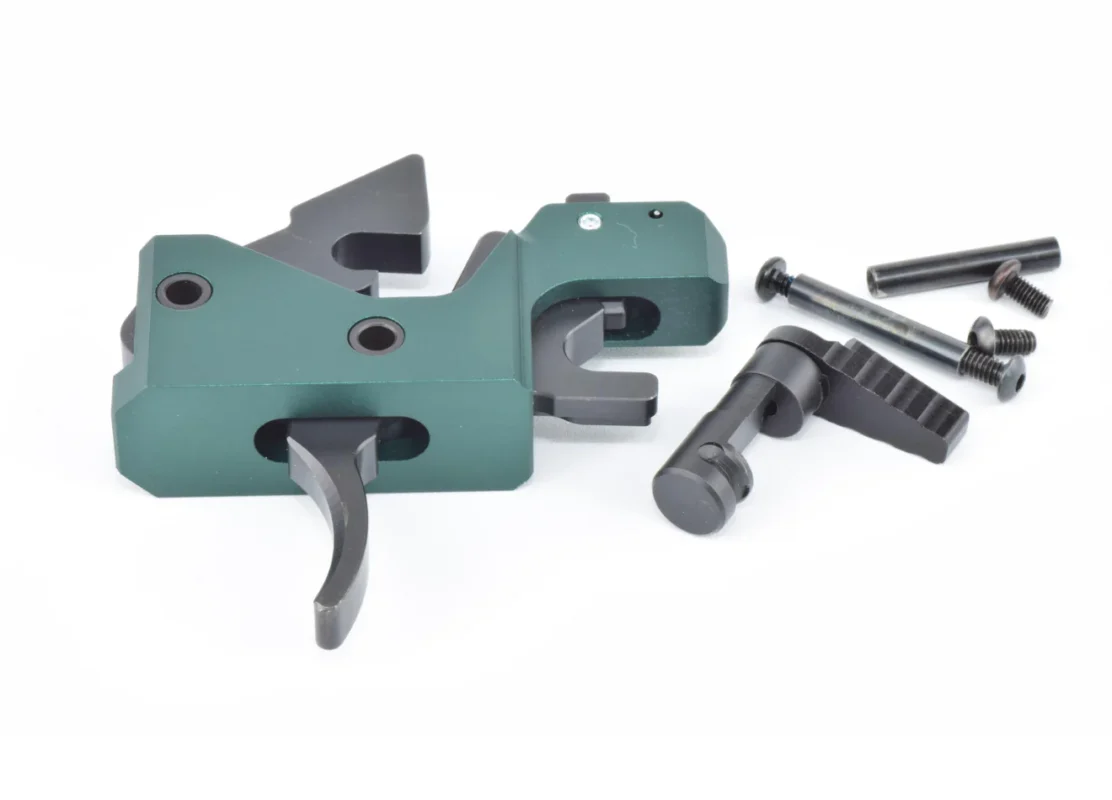
FRT Trigger For AR15
Jul
FRT Trigger For AR15
FRT Trigger For AR15 , are you looking to upgrade your AR-15 build with one of the most exciting developments in modern trigger technology? The FRT Trigger For AR15. If you want faster follow-up shots, unparalleled reset speed, and a highly responsive shooting experience, you’ve likely run across the phrase FRT Trigger For AR15.
But what exactly is an FRT (Forced Reset Trigger)? How does it work? Is it legal in your state? And most importantly, how do you tune your AR-15 to make sure it runs flawlessly with an FRT?
What is an FRT Trigger For AR15?
A Forced Reset Trigger (FRT) is a drop-in trigger modification designed specifically for semi-automatic platforms like the AR-15.
With a standard factory trigger, you pull the trigger, the gun fires, and then you have to manually release your finger forward to let the trigger click (or “reset”) before you can pull it to fire another round.
An FRT trigger changes this process entirely. It uses the internal cycle of your rifle to force the trigger back to the reset position automatically. FRT Trigger For AR15.
The Core Difference: Manual vs. Mechanical Reset
- Standard Trigger: You pull -> Gun fires -> You let go to reset -> You pull again.
- FRT Trigger: You pull -> Gun fires -> The rifle pushes your finger forward to reset the trigger -> You are instantly ready for the next pull.
Because your finger is pushed forward mechanically, your split times (the time between shots) drop significantly. You can achieve rapid, highly accurate follow-up shots that make target shooting and tactical drills incredibly fast and satisfying.
How Does a Forced Reset Trigger Work?
To understand why the FRT trigger for AR15 is so unique, we have to look at what happens inside the rifle’s receiver during a single firing cycle.
When you fire your AR-15, the explosive force of the bullet pushes gas back into your upper receiver, forcing the Bolt Carrier Group (BCG) to slide backward to eject the empty casing. As the BCG travels back forward to chamber a new round, it interacts directly with the FRT mechanism.
The Firing Cycle of an FRT:
- The Pull: You pull the trigger. The hammer drops, striking the firing pin and firing a round.
- The Recoil: The bolt carrier group (BCG) flies backward to eject the spent casing.
- The Reset: As the BCG cycles, a custom-designed locking bar inside the FRT trigger is activated. This bar physically forces the trigger blade forward into its reset position, pushing your finger slightly along with it.
- The Ready Position: The trigger is instantly locked into its reset state before the BCG even finishes sliding back into place, preventing “trigger freeze” (when you pull the trigger before it has had a chance to reset).
Because the trigger resets mechanically, you can shoot again as fast as you can apply pressure to the newly reset trigger. It is important to note: The gun still only fires one round per function of the trigger. You must pull the trigger for every single shot; the trigger just helps you do it much faster.
FRT Trigger For AR15 vs. Binary Triggers vs. Bump Stocks
Many gun enthusiasts confuse FRTs with other rapid-fire accessories on the market. Let’s look at how they compare side-by-side.
| Feature / Type | Forced Reset Trigger (FRT) | Binary Trigger | Bump Stock |
| How It Fires | Fires 1 round on the pull. Automatically forces the trigger forward to reset. | Fires 1 round on the pull, and 1 round on the release of the trigger. | Uses rifle recoil to slide the whole gun back and forth against a stationary finger. |
| Mechanism | Internal replacement trigger group. | Internal replacement trigger group. | External stock replacement. |
| Control & Feel | Very natural; keeps your hands securely in place. | Requires learning the “pull-release” cadence. | Can feel loose; requires forward pull on the handguard. |
| Precision | High; preserves standard aiming grip. | Moderate; requires timing focus. | Low; hard to maintain a tight group. |
Is the FRT Trigger Legal in the USA?
The legal history of the FRT trigger for AR15 has been a rollercoaster, but we finally have long-awaited clarity.
Federal Law: Clear and Legal
For several years, the Bureau of Alcohol, Tobacco, Firearms and Explosives (ATF) attempted to classify forced reset triggers as “machine guns,” leading to confiscations and legal battles.
However, following a landmark Supreme Court decision regarding rate-of-fire accessories (Garland v. Cargill), federal courts ruled that the ATF had exceeded its authority.
The May 2025 DOJ Settlement: In mid-2025, the U.S. Department of Justice (DOJ) reached a formal settlement with major manufacturers (including Rare Breed Triggers). Under this settlement, FRT triggers are federally legal and are NOT classified as machine guns. The federal government stopped all enforcement and even returned previously seized triggers to their owners.
State Law: Where Things Get Tricky
While the federal government recognizes FRTs as fully legal civilian accessories, individual states still have the right to restrict them. As of 2026, several states ban FRTs under local definitions like “rapid-fire trigger activators” or “multiburst trigger activators.”
- Banned States: California, Connecticut, Delaware, Hawaii, Illinois, Maryland, Massachusetts, New Jersey, New York, Oregon, Rhode Island, Washington, D.C.
- States with Active Legal Cases / Gray Areas: Colorado, Florida, Minnesota, Nevada, Virginia.
- Friendly States: Texas, Ohio, Arizona, Florida (mostly), and all other remaining states allow the purchase, ownership, and transport of FRT triggers.
How to Install & Tune Your AR-15 for an FRT Trigger
An FRT is a high-performance upgrade. Think of it like putting a racing engine into a street car—you need the right supporting parts to ensure the system operates smoothly. If your AR-15 isn’t set up properly, you may experience “bolt bounce,” failure to feed, or short-stroking.
Follow these steps to install and tune your rifle for maximum reliability:
1.Ensure a Full-Auto Bolt Carrier Group (BCG):Prerequisite.
Your AR-15 must have a standard full-auto style BCG (sometimes called an M16 cut carrier). The extra metal on the bottom-rear of a full-auto BCG is what physically trips the FRT’s locking bar to reset the trigger. A lightweight or semi-auto cut BCG will not work.
2.Drop in the Trigger Unit:Installation.
Ensure your firearm is completely unloaded. Remove your old trigger group and slip the self-contained FRT housing into your lower receiver. Line up the holes, insert your trigger pins, and secure them with anti-walk pins (highly recommended due to the increased rate of vibration).
3.Upgrade to a Heavy Buffer:.
Because of the speed at which the rifle cycles, you need a heavier buffer weight to slow down the bolt’s rearward and forward travel. Start with an H2 buffer, but many builds run smoothest with an H3 buffer. This prevents “bolt bounce,” which is when the bolt bounces off the chamber face before the hammer can strike.
4.Select the Right Buffer Spring:
Combine your heavy buffer with a strong, high-quality buffer spring (like a Sprinco Blue or Sprinco Red spring). This ensures the bolt carrier group slams back into battery with enough force to chamber the next round reliably, even under rapid fire.
5.Perform a Dry-Fire Function Check:Safety Check.
Before going to the range, verify the build safely. Clear the weapon. Pull the trigger and hold it back—the hammer should drop. While keeping the trigger held completely back, manually cycle the charging handle. You should feel the trigger physically force your finger forward. Release and pull again to ensure the hammer drops a second time.
Troubleshooting Common FRT Issues
If you take your newly built rifle to the range and it isn’t running smoothly, don’t panic. High-performance triggers usually just require a tiny bit of tuning.
1. The Gun Fires One Shot and Then Locks Up
- The Cause: Your finger is likely “riding” or squeezing the trigger too hard, preventing it from finishing its mechanical reset cycle. Alternatively, your bolt carrier group might not be a true full-auto cut. FRT Trigger For AR15
- The Fix: Ensure your BCG is a full-auto style. Practice a lighter, more rhythmic trigger pull rather than strangling the grip.
2. Failure to Feed / Out of Battery Malfunctions
- The Cause: The bolt carrier group is traveling back and forth too quickly, causing it to outrun the spring tension of your magazine.
- The Fix: Switch to a heavier buffer (H2 or H3) to slow down the cycle. Make sure you are using high-quality magazines with strong spring tension (like Gen 3 PMAGs).
Frequently Asked Questions About FRTs
Is an FRT a machine gun?
No. Under federal law, a machine gun is defined as a weapon that fires more than one shot automatically with a single function of the trigger. With an FRT, the trigger must reset and be pulled again for every single shot.
Do I need a tax stamp for an FRT trigger?
No. Because FRTs are federally legal civilian accessories, they do not require a National Firearms Act (NFA) tax stamp, registration, or extra wait times. You can buy them online and have them shipped directly to your door in friendly states.
Will an FRT work with 9mm PCCs (Pistol Caliber Carbines)?
Yes, but PCCs are direct blowback systems, which cycle much faster and harsher than standard gas-operated AR-15s. Running an FRT in a 9mm AR-style build usually requires specialized heavy blowback buffers and a highly tuned spring set to prevent damage or malfunctions.
Do I need anti-walk pins?
Yes, they are highly recommended. Because of the fast mechanical reset and rapid fire, your receiver will experience increased vibrations. Standard trigger pins can walk out of the receiver over time, which can ruin your lower receiver’s holes. Anti-walk pins lock securely in place.
Ready to Upgrade Your AR-15 Build?
An FRT Trigger for AR15 is one of the most fun, innovative upgrades you can make to your rifle. By mechanically assisting your trigger reset, it unlocks incredibly fast split times while keeping you compliant with federal firearms laws.
Just remember to pair your trigger with a full-auto BCG, an H2 or H3 heavy buffer, and a strong buffer spring to get the smooth, reliable, rapid-fire machine you’ve always wanted.
